QuillKits
QuillKits
UX Research
Product Strategy
E-Commerce
B2B
Mobile Design
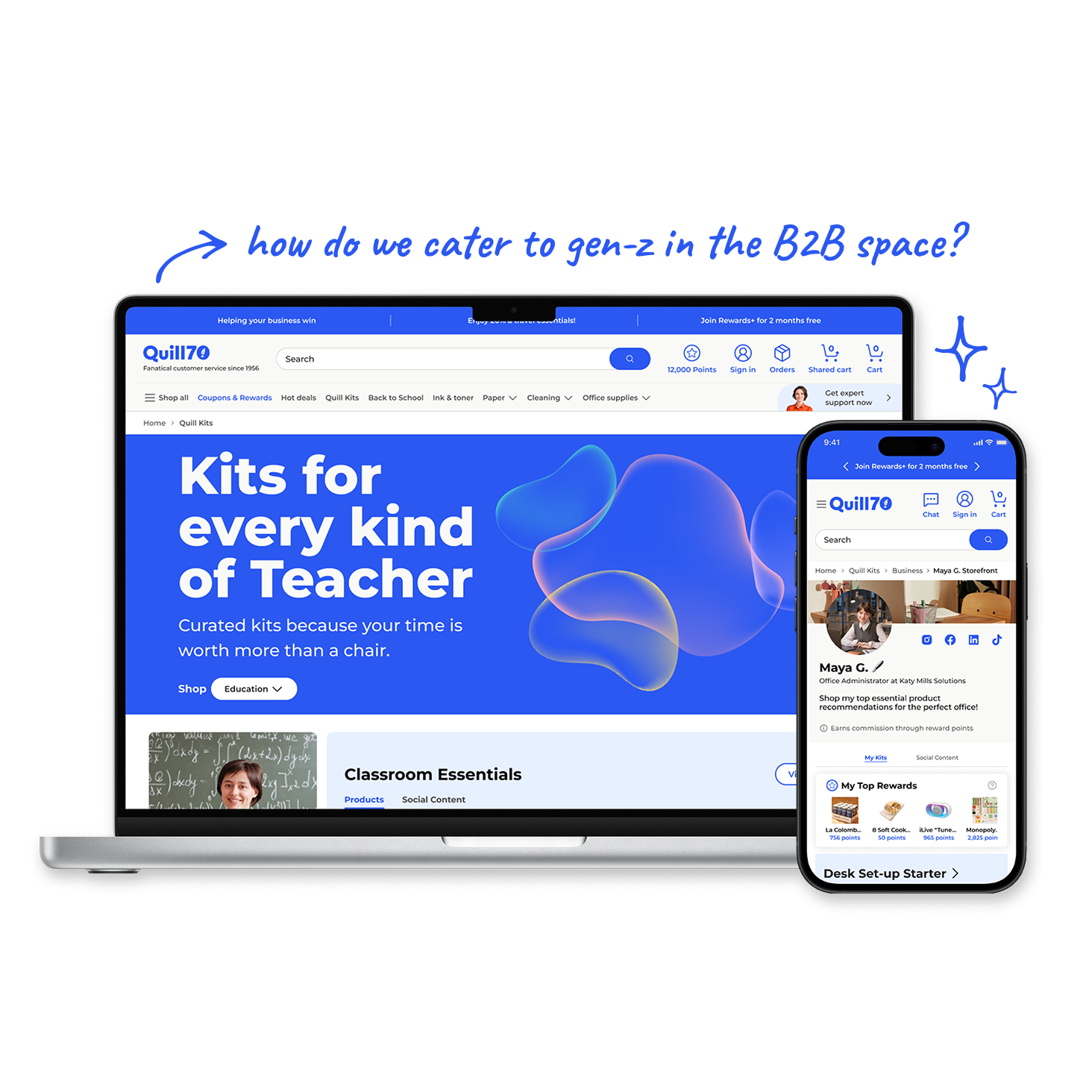
A different way to shop for work. QuillKits explores the intersection of user needs, e-commerce, and product strategy. Through user research, journey mapping, and iterative design, I developed an influencer-driven storefront concept that turns workplace purchasing into a more curated and engaging experience while still addressing the realities of B2B purchasing.
QuillKits
UX Research
Product Strategy
E-Commerce
B2B
Mobile Design
A different way to shop for work. QuillKits explores the intersection of user needs, e-commerce, and product strategy. Through user research, journey mapping, and iterative design, I developed an influencer-driven storefront concept that turns workplace purchasing into a more curated and engaging experience while still addressing the realities of B2B purchasing.
01
The Challenge
Quill has built a strong base of loyal customers. As its existing customer base ages, the company faces a growing need to engage younger workplace buyers and build lasting relationships with the next generation of customers.
The challenge was to conceptualize an e-commerce experience that would feel more relevant to Gen-Z customers while still supporting Quill's broader business goals.
Design Question
How might we design a product experience that helps Gen-Z B2B buyers discover and shop for workplace products?
02
Initial Research
User Personas
Because Quill did not have readily available customer data on our target audience, Gen Z B2B buyers, I partnered with the Marketing interns to research e-commerce trends, industry articles, and relevant data sources. I synthesized these findings into key user insights that informed the development of three target user personas.
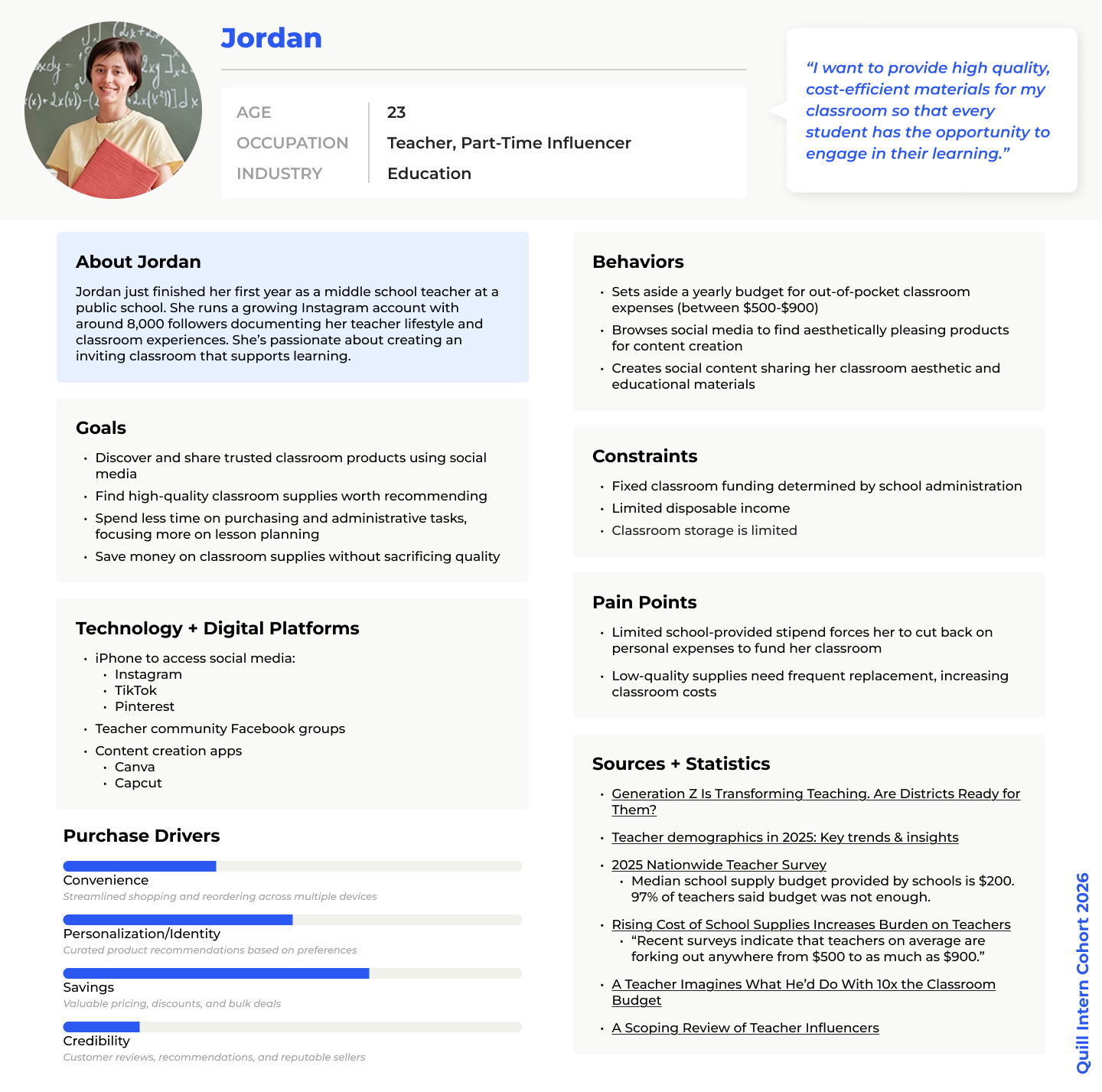
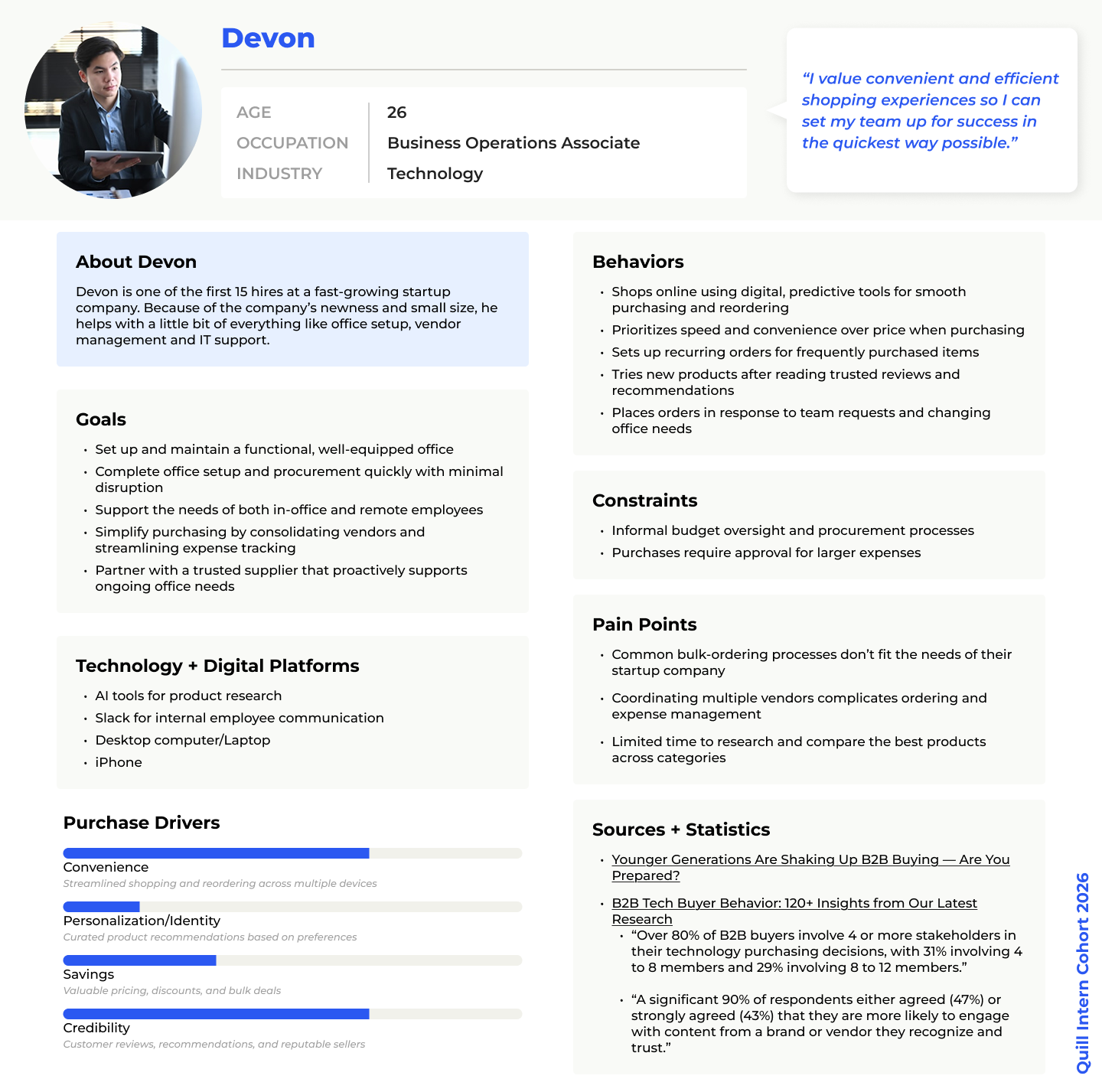
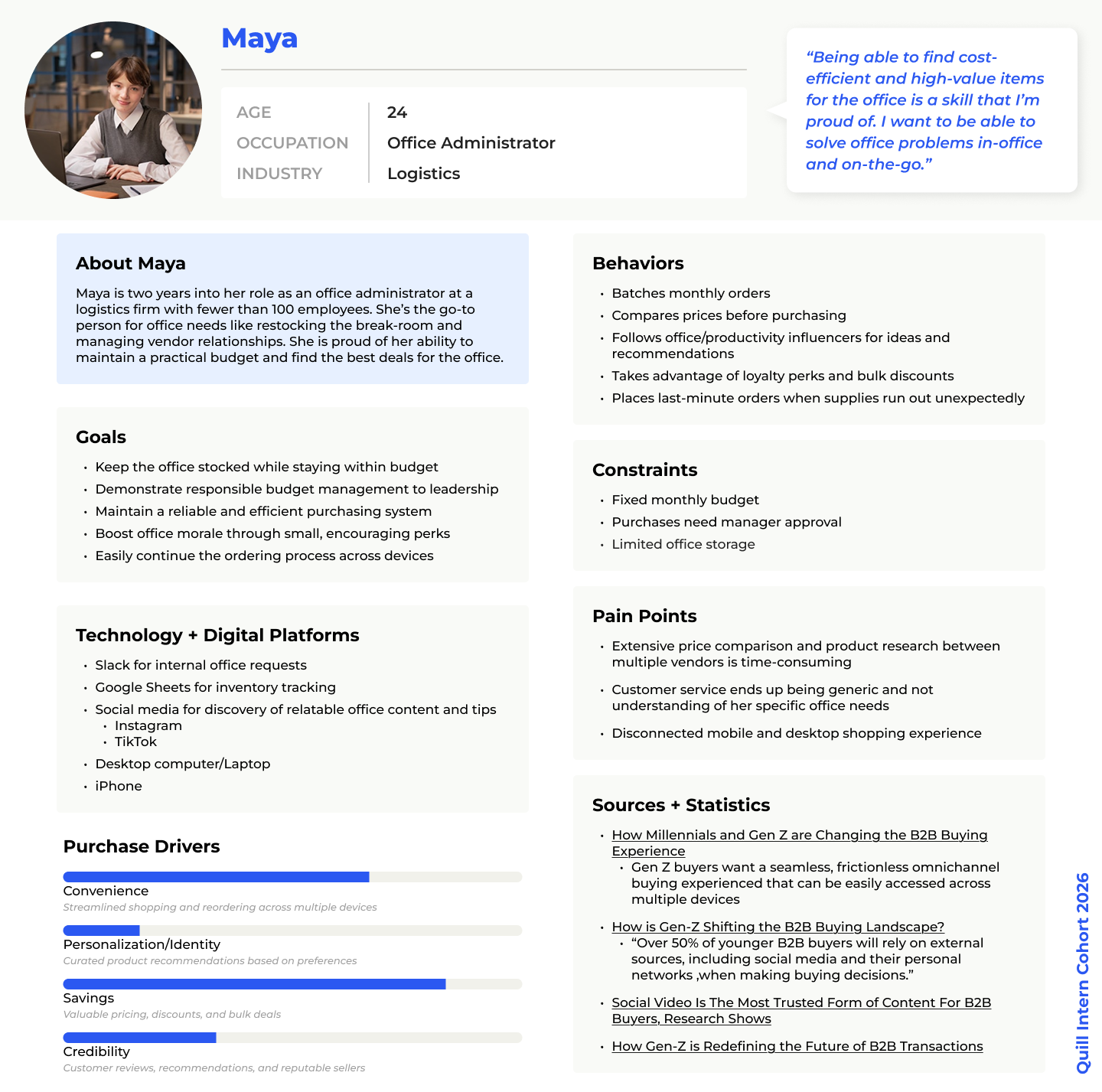
User Personas
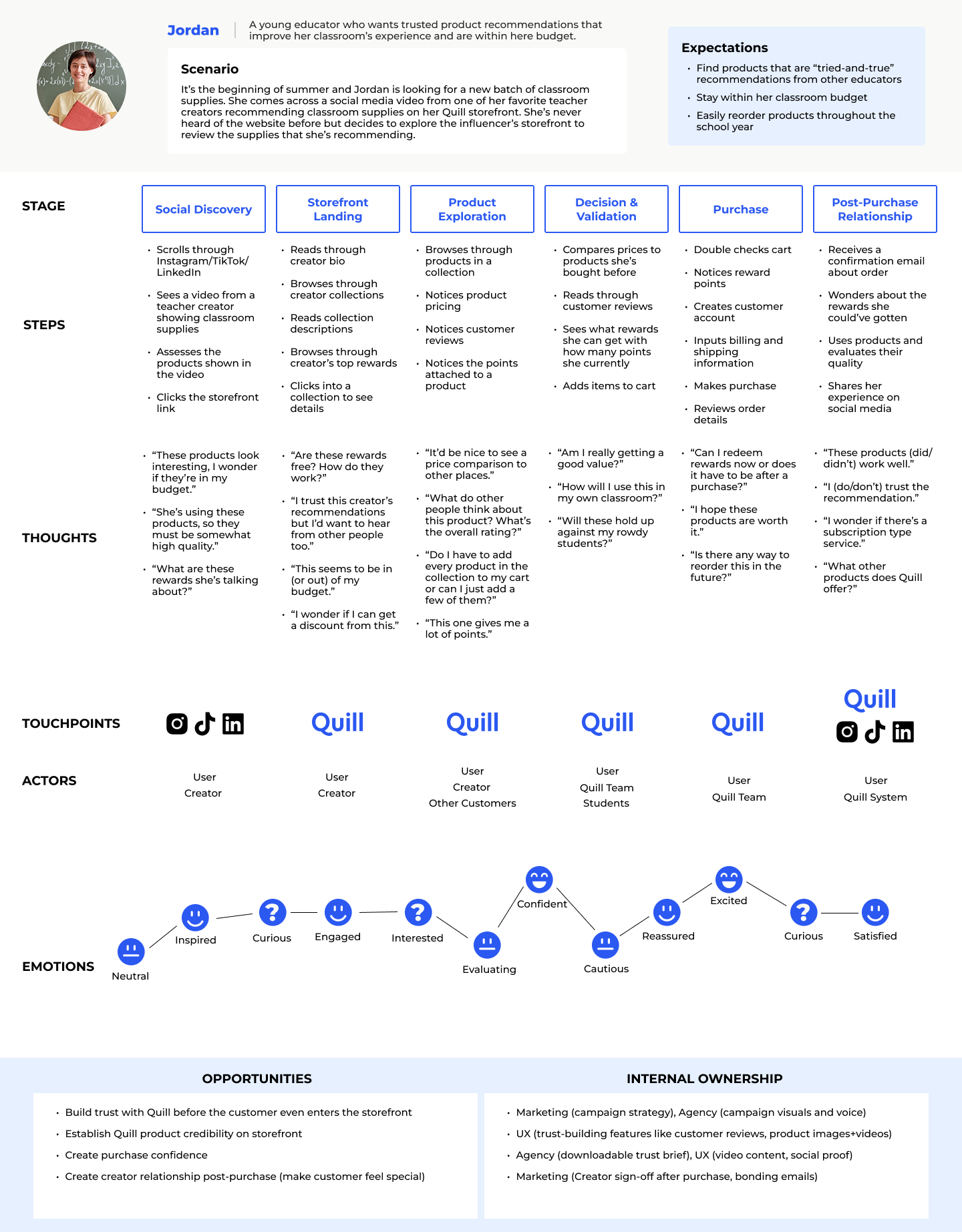
To better understand how our target user might experience the QuillKits storefront, I mapped Jordan's purchase journey from discovering a creator on social media through her post-purchase experience. Inspired by Spotify's journey mapping approach, I documented her actions, thoughts, emotions, touchpoints, and key actors across each stage of the journey. This helped me identify opportunities to build trust in the storefront, strengthen product credibility, increase purchase confidence, and create a stronger relationship with customers beyond the initial purchase.
03
From Research to Design Direction
Initial user research and journey mapping revealed several opportunities that informed the structure and interaction of the QuillKits experience.

Create a curated shopping experience
Organize products around relevant workplace needs
rather than treating the catalog as a collection
of individual products.

Make discovery more engaging
Introduce a storefront experience that feels more
approachable and relevant to younger buyers.

Design for convenience
Create a seamless shopping experience that fits Gen Z's expectation for
convenient, low-friction purchasing.
04
Wireframe Iterations
I translated our research findings and cross-department requirements into early wireframes, exploring different approaches to the storefront's structure, content hierarchy, and product discovery.
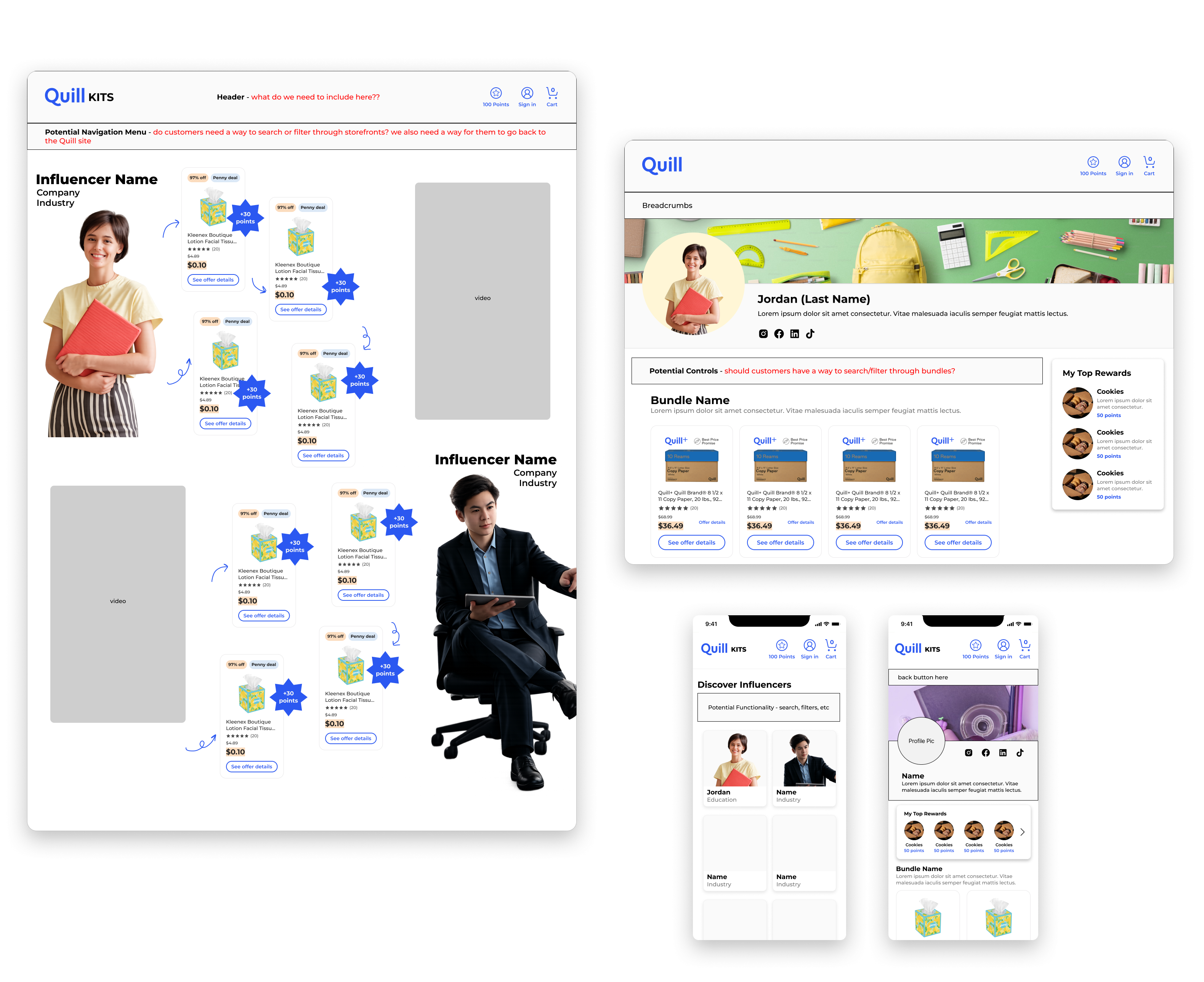
The idea
Exploring the initial storefront structure
Through cross-functional meetings, we determined what our basic requirements were for the storefront experience.
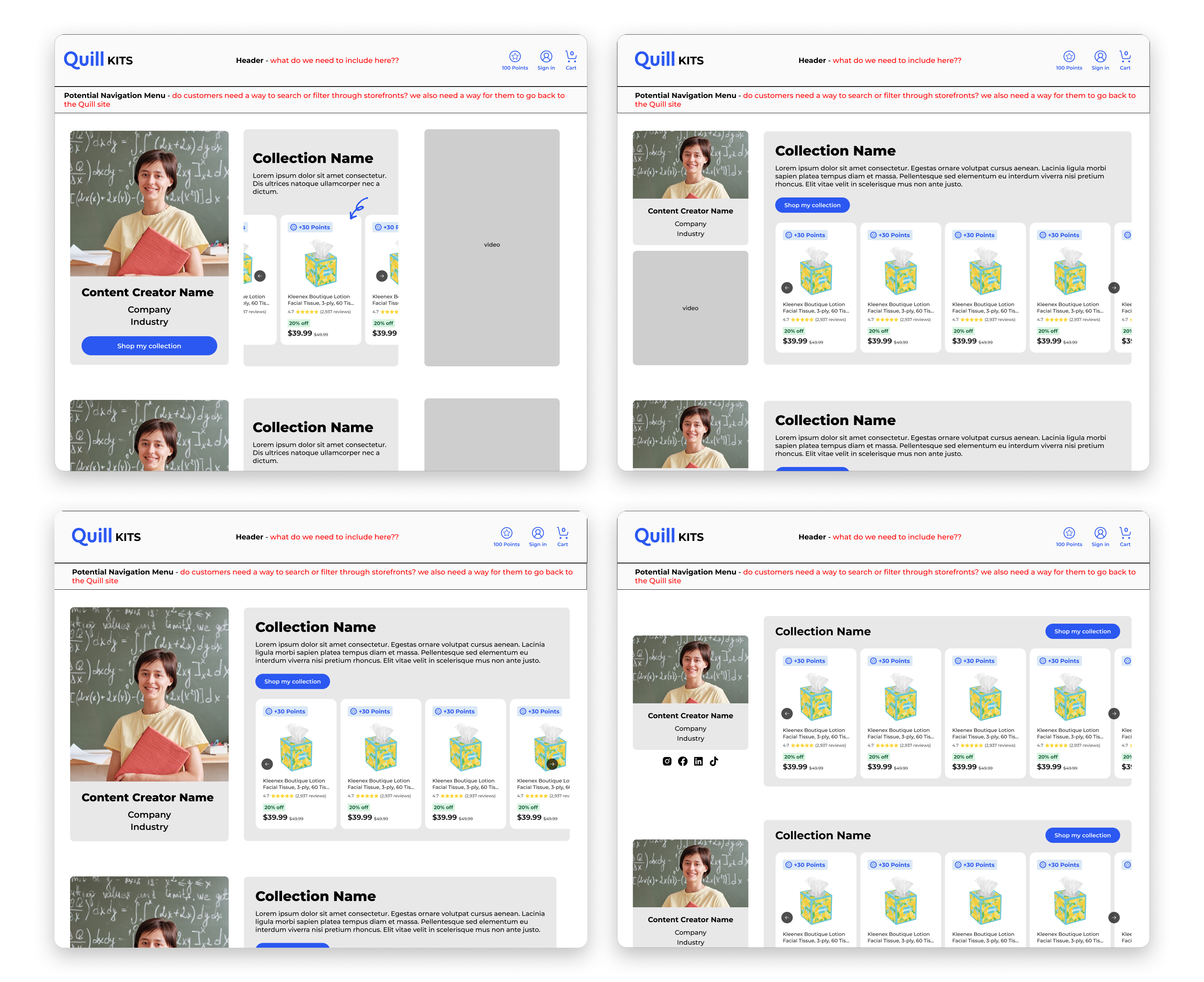
Currently iterating..
Refining the experience
Wireframes were consulted with senior designers to discuss what was feasible and fit within Quill's current design ecosystem.
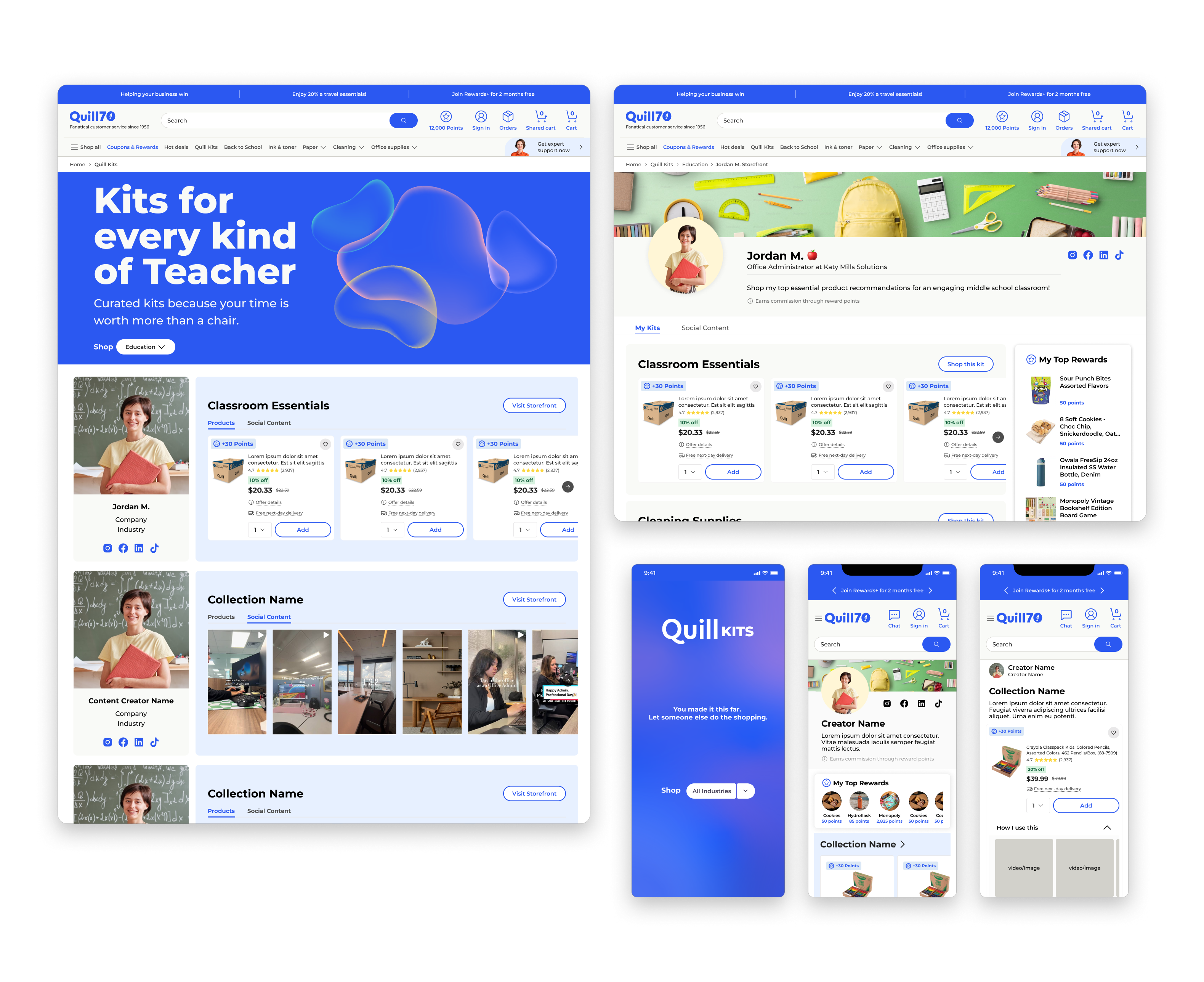
Adding some color
Moving toward the final concept
Branding was defined and additional design research was conducted to refine the wireframes for each step of the QuillKits experience.
04
Final Concept & Prototypes
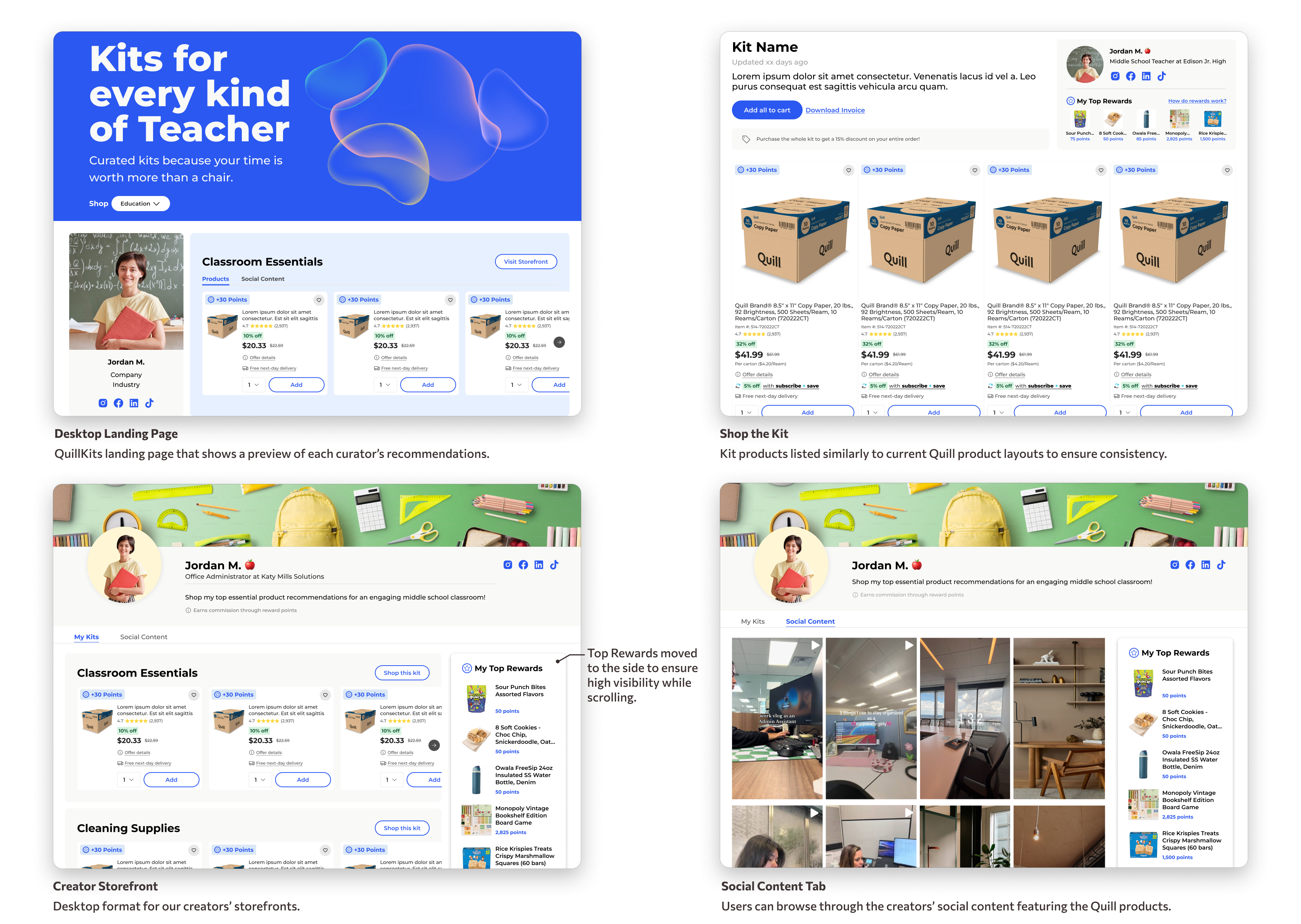
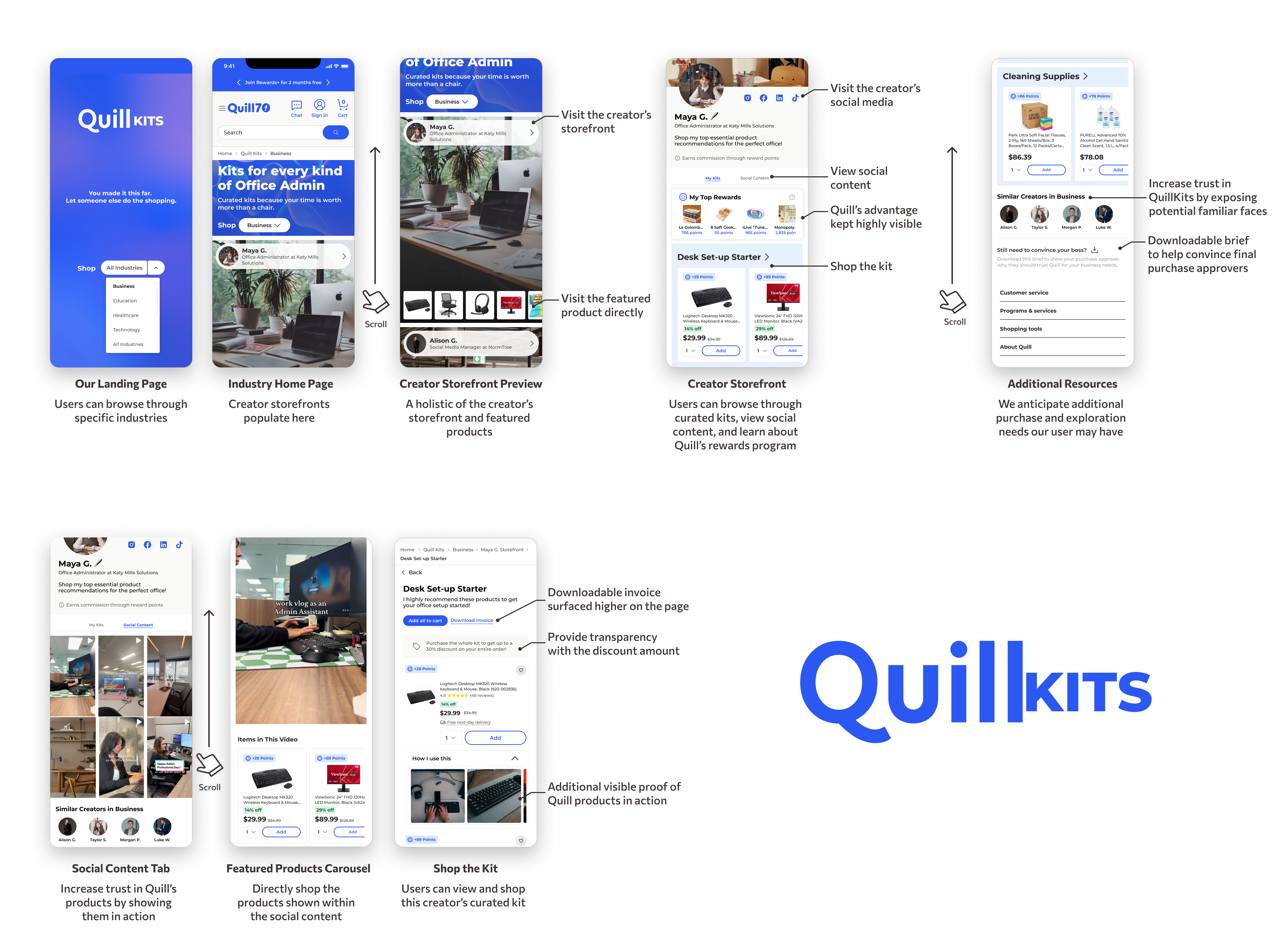
The final QuillKits concept translates our research and design explorations into a storefront experience built around what Gen Z buyers value: convenience, engagement, and a seamless path to purchase. Because Quill's loyalty and rewards program is a key advantage, we created opportunities throughout the experience to introduce new customers to its benefits and show how they can add value to their purchases. We also incorporated intentional details throughout the journey to anticipate B2B buyers' needs, helping them discover relevant products, understand their benefits, and make confident purchasing decisions with less friction.
05
My Takeaways
QuillKits was my first opportunity for end-to-end design within a B2B e-commerce context. The project challenged me to think beyond individual user needs and consider how UX decisions intersect with broader product and business goals. I also gained experience collaborating cross-functionally in a professional office setting, strengthening my communication skills with peers and my ability to present ideas effectively to senior leadership.

In B2B contexts, the end user may only be one part of a broader purchasing process.

Cross-department requirements and business needs are essential to shaping a product strategy that also aligns with user needs.

Iteration is key to identifying opportunities for improvement and strengthening design ideas.
B2B experiences still need to feel intuitive and engaging for individual users.
Research helps translate broad business goals into specific user needs.
Iteration makes it possible to connect research insights to tangible design decisions.